
Monday, November 28, 2011


Thursday, November 18, 2010
Summer VISITORS
Now that we have entered the prelude to summer with the late spring rain, we also have the pleasure of welcoming various summer visitors, like the cuckoos, the European roller, the bushveld kingfisher and other bird species who do not stay over in winter but take wing to warmer climates.
The interesting thing about these bird species is that somehow they know when to leave the region wherever they stay in winter and trek southwards. I want to single out a few of these bird species as they have peculiar attributes, like, for instance the redchested cuckoo, the Afrikaans name is the Piet-my-vrou, from a rendering of the calls they make. We can hear them calling endlessly, not only in daytime, but also during the night, but they are not easy to see, as they hide in the top branches of high trees for long periods during which they call. They come from regions in central Africa and normally arrive in our region in October and leave again in April, but this year they only arrived in November. The reason for this delay is that we have not had sufficient rain in October and these birds live mainly on caterpillars which only appear when the humidity is high, which means that the cuckoos sit somewhere in the Congo but in some way they know exactly when we will be having the first decent spring rain and they frequently appear about a day or three before the rain! We are not quite sure how they know exactly when to come, because I do not believe that they watch the weather reports on TV!
They are extremely bad parents, the female lays one egg per nest in the nest of other local breeding birds like various robins, thrushes and chats and leaves the upbringing of their children to the poor birds in whose nest the egg is laid, and not only that, but their chicks throw out the host bird's eggs or chicks within four days after hatching! Some of the other cuckoo species do not throw out the host's chicks, they just trample them to death and some of them even demand to be fed for a few weeks after they are big enough to leave the nest and fend for themselves!
Good by for now!
Oupa
Tuesday, October 26, 2010
CHANGED TEACHERS?
The wise king of Israel, Solomon, is credited with saying: "Lazy people should learn a lesson from the way ants live" (Proverbs 6:6, Good News Bible). The other day I came to the conclusion that things have changed since Solomon's time and that the animals and birds are "aping" the ways of the humans (if the apes will excuse me using this way of stating different behaviour of non-humans).
Around first light, just about every morning, my friend, the duiker ram, appears and expects to be given his daily ration of papino and he usually stands around until I get around to giving him his ration and most mornings I take a quantity of chicken feed out at the same time for the spur fowls (previously called francolins!) of which we have a family of five, Pop, Mom, and three half grown youngsters. Two mornings ago, I did not take out the chicken feed at the same time as I put out the papino and I had hardly closed the door behind me when the five spur fowl started kicking up a noise and toi-toing around the duiker who was enjoying his breakfast.
The only conclusion I could come to was that the spur fowls had learnt that some humans tend to congregate and wave placards and shouting "we demand ….. ", and in general making a nuisance of themselves in order to get what they think they are entitled to, and just like the humans, the noise and dancing and shouting tend to minimize as soon as they get what they demanded!
As the Romans used to say: O, tempora! O, mores!
Oupa.
Sunday, October 17, 2010
THE BOSS
Surely we all know a person to whom this is 100% applicable:
- The Boss is ALWAYS right.
- The Boss does not SLEEP, he RELAXES.
- The Boss does not READ the paper, he STUDIES it.
- The Boss does not HESITATE, he REFLECTS.
- The Boss is not LATE, he has been DELAYED.
- The Boss is not WRONG, he is MISUNDERSTOOD.
- The Boss does not GO OUT, he is ABSENT.
- The Boss does not COMPLICATE, he ORGANIZES.
- Enter the office of the Boss with YOUR IDEA and leave with HIS IDEA.
- In case of doubts, rule No. 1 applies.
Oupa
Sunday, October 10, 2010


SNAKES

Many people have very confused ideas about snakes, as a snake expert, Johan Marais, points out in his book A Complete Guide to the Snakes of Southern Africa. He lists some of the misconceptions:
You frequently hear about large mambas, stretching from one side of the road to the other, but the maximum size recorded is about 4,5 m.
All snakes spit their venom! Wrong, in our area only the rinkhals and the Moçambique spitting cobra do that.
The snake can sting with its forked tongue! Nonsense, its tongue is only for smelling, it can not even lick with it.
The puff adder strikes backwards! No, it can only strike forwards or sidewards.
Snakes move in pairs and if you kill one, its mate will come looking for you! Superstition! Snakes do not have constant companions, they live alone and only mate in the spring.
Do snakes have nests? Not our snakes, but the King Cobra of Asia sometimes builds a rough nest, our snakes live in holes or under a rock or tree stump.
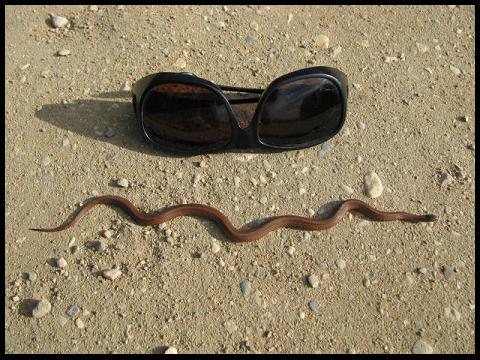
In South Africa we have only a few very poisonous snakes: most adders; the mambas; the cobra family; the yellow bellied sea snake; the vine snake; and the boom snake. Most of the snakes are completely harmless or mildly venomous and quite lot of them are extremely useful as they feed on the rodents and insects like snails and beetles.
Moral: Do not kill every snake that crosses your path!
Oupa
Wednesday, September 8, 2010
THE SIZE OF THE EARTH
In ancient times it was thought that the earth was flat, covered by a dome (with windows through which the rain fell) where the stars were situated and along which the sun and the moon revolved around the earth! Then some people living near the sea, noticed that when ship sailed away the hull of the ship disappeared first while the sails were still visible and that led the to the idea that the earth was not flat! Then they also noticed that when travelling far north or far south some stars would disappear and new ones appear! As far as we know, the first person to state that the earth was a sphere, was a Greek named Philolaus of Tarentum who in 450 B.C. put forward this view and by 350 B.C. this was generally accepted, by learned men all over the known world and the they started speculating about the size of the earth.
Then a Greek philosopher, Eratosthenes of Cyrene (276 – 196 B.C.) was told that on summer solstice (21 June) at midday a vertical rod would cast no shadow in Syene (which was situated just about on the Tropic of Capricorn – when the sun would be directly overhead), but a rod in Alexandria, about 800 km north of Syene, would cast a short shadow, indicating that the sun was there about 7° south at the same time! Eratosthenes then used this to calculate the circumference of the earth: If 7° equalled 800 km, then 360° would be about 41 000 km! Modern methods have arrived at a figure of 40 067,78 km at the equator, so hats off to mr Eratosthenes who was born 2286 years ago!
But this figure sounded too high for some people and later astronomers arrived at a figure of about 29 000 km which was accepted up to the time of Columbus who used these figures to convince his backers that he could easily reach Asia by sailing westwards over the Atlantic Ocean, but in fact it was not, because America occupied the place where they thought Asia should be!
The moral of the story: Do not jump to conclusions!
Oupa
Subscribe to:
Posts (Atom)